Geotextile Solutions in Nigeria
Geotextiles are permeable geosynthetic materials widely applied in transportation infrastructure, embankment construction, drainage systems, and ground improvement works. Within Nigeria’s variable subgrade environments and high rainfall conditions, properly specified geotextiles are essential for separation, filtration, reinforcement, and long-term pavement performance.
Geotextiles form an important component within broader geosynthetics engineering solutions used in infrastructure and environmental projects.
Primus Atlantic Engineering Limited provides engineering-based geotextile specification support, coordinated material supply, and installation oversight for road, railway, and environmental projects across Nigeria. Material selection is guided by geotechnical parameters, structural loading requirements, hydraulic performance criteria, and durability considerations to ensure reliable field performance.
What is a Geotextile?
Geotextiles are permeable geosynthetic fabrics used in civil engineering to improve soil performance and enhance the stability and durability of infrastructure systems. When placed between soil layers or structural materials, geotextiles perform functions such as separation, filtration, reinforcement, protection, and drainage.
In transportation infrastructure, geotextiles are commonly installed between the subgrade and aggregate layers to prevent soil migration, maintain structural integrity of the base course, and improve load distribution. Their hydraulic properties also allow water to pass through the material while retaining soil particles, making them effective for filtration and subsurface drainage applications.
Proper geotextile selection depends on factors such as soil characteristics, loading conditions, hydraulic performance requirements, and long-term durability considerations within the project environment.
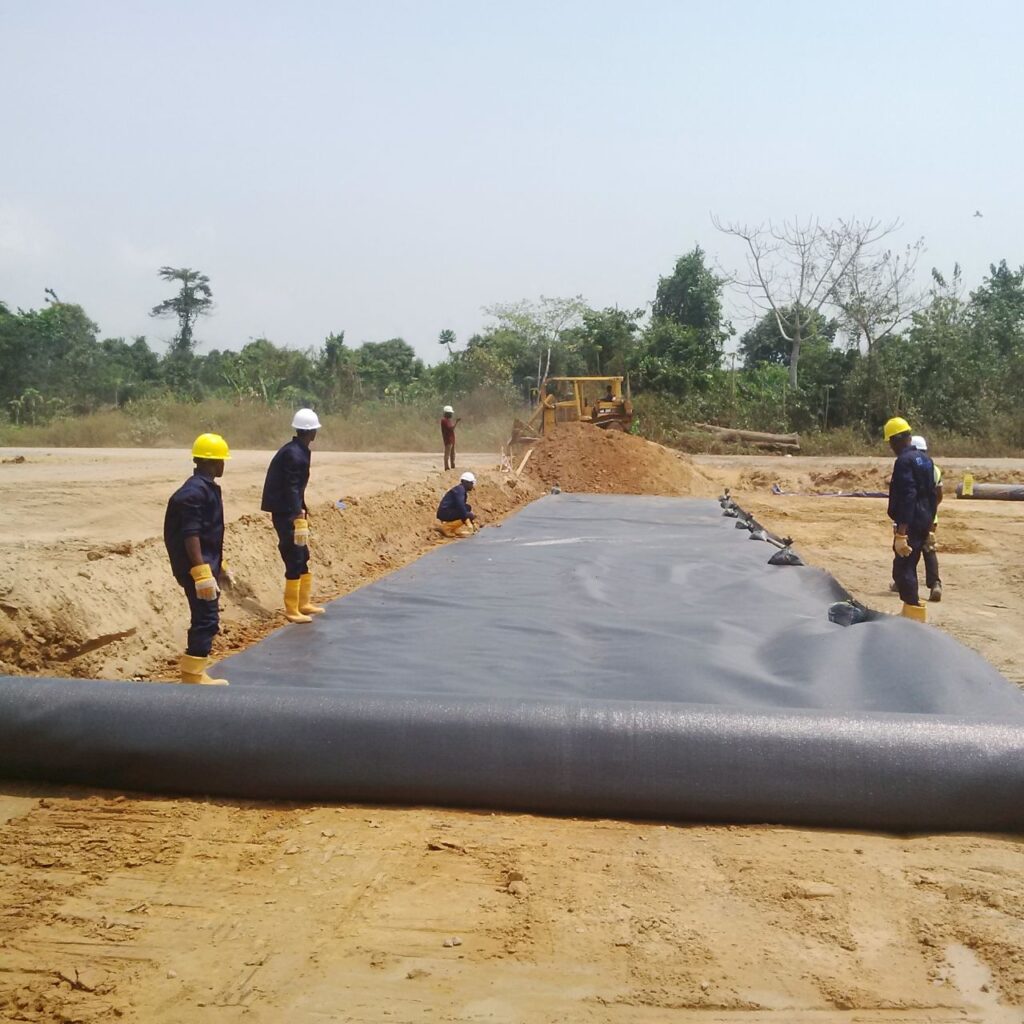
Types of Geotextiles
Geotextiles used in civil engineering applications are generally classified into two primary categories: woven and nonwoven materials. Each type possesses distinct mechanical and hydraulic properties that influence its suitability for specific infrastructure applications.
Woven Geotextiles
Woven geotextiles are manufactured by interlacing synthetic yarns in a regular pattern, forming a strong and dimensionally stable fabric. al. Woven geotextiles are commonly used in road base stabilization, embankment reinforcement, and areas where subgrade conditions require improved structural support.
Nonwoven Geotextiles
Nonwoven geotextiles are produced by bonding synthetic fibers through needle punching, heat bonding, or chemical processes. Nonwoven geotextiles are widely used in drainage systems, filtration layers, erosion control applications, and situations where water flow and soil retention must be effectively managed.
Applications of Geotextiles in Infrastructure Projects
Geotextiles are widely applied in transportation, earthworks, and environmental infrastructure where soil conditions, groundwater presence, and long-term loading influence structural performance. In road and railway construction, they are typically installed between subgrade soils and aggregate layers to provide separation, maintain structural integrity, and improve load distribution.
Their filtration properties also support subsurface drainage systems, retaining wall backfills, and erosion control applications by allowing water passage while preventing soil migration. When properly specified, geotextiles enhance constructability, improve long-term pavement performance, and reduce maintenance requirements in infrastructure projects.
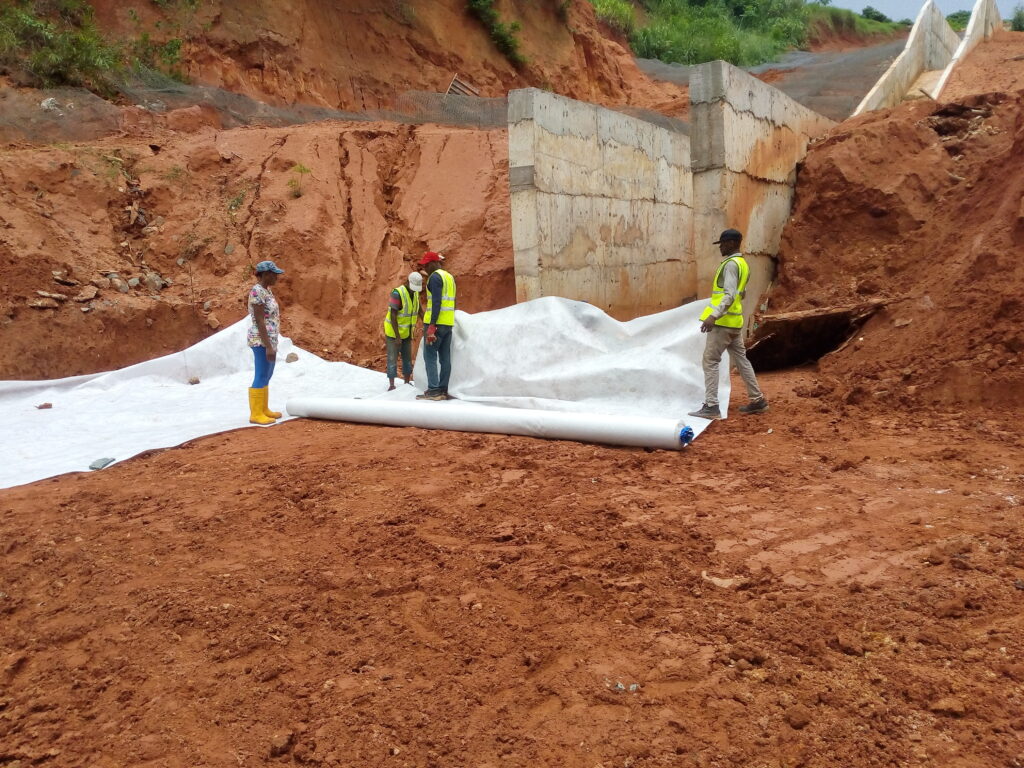
Engineering Selection Considerations
Effective geotextile performance depends on proper material selection based on project-specific engineering parameters. Key considerations include soil characteristics, tensile strength requirements, hydraulic performance, durability under environmental exposure, and interaction with surrounding construction materials.
Selecting appropriate geotextiles requires evaluation of these factors alongside anticipated loading conditions and installation methods. Engineering-based material specification helps ensure that geotextile systems perform reliably as separation, filtration, or reinforcement layers within the overall infrastructure design.
Technical Consultation & Project Support
Primus Atlantic Engineering Limited provides technical consultation, geotextile specification support, and coordinated material supply for infrastructure and environmental projects across Nigeria.
Effective geotextile performance depends not only on proper material selection but also on correct installation and integration within the overall infrastructure design. Our team works with consultants, contractors, and project stakeholders to ensure that geotextile systems are appropriately specified and implemented to achieve reliable long-term performance.
Frequently Asked Questions About Geotextiles
What is the purpose of geotextile in road construction?
Geotextiles are used in road construction to provide separation between weak subgrade soils and aggregate base layers. This prevents soil migration, improves load distribution, and enhances long-term pavement performance.
What is the difference between woven and nonwoven geotextiles?
Woven geotextiles are manufactured by interlacing yarns and are typically used for reinforcement and load distribution. Nonwoven geotextiles are needle-punched fabrics that provide higher permeability and are commonly used for filtration and drainage applications.
How is geotextile selected for infrastructure projects?
Geotextile selection depends on soil conditions, structural loading, hydraulic performance requirements, and durability considerations. Proper engineering evaluation ensures the material performs effectively within the overall infrastructure system.